
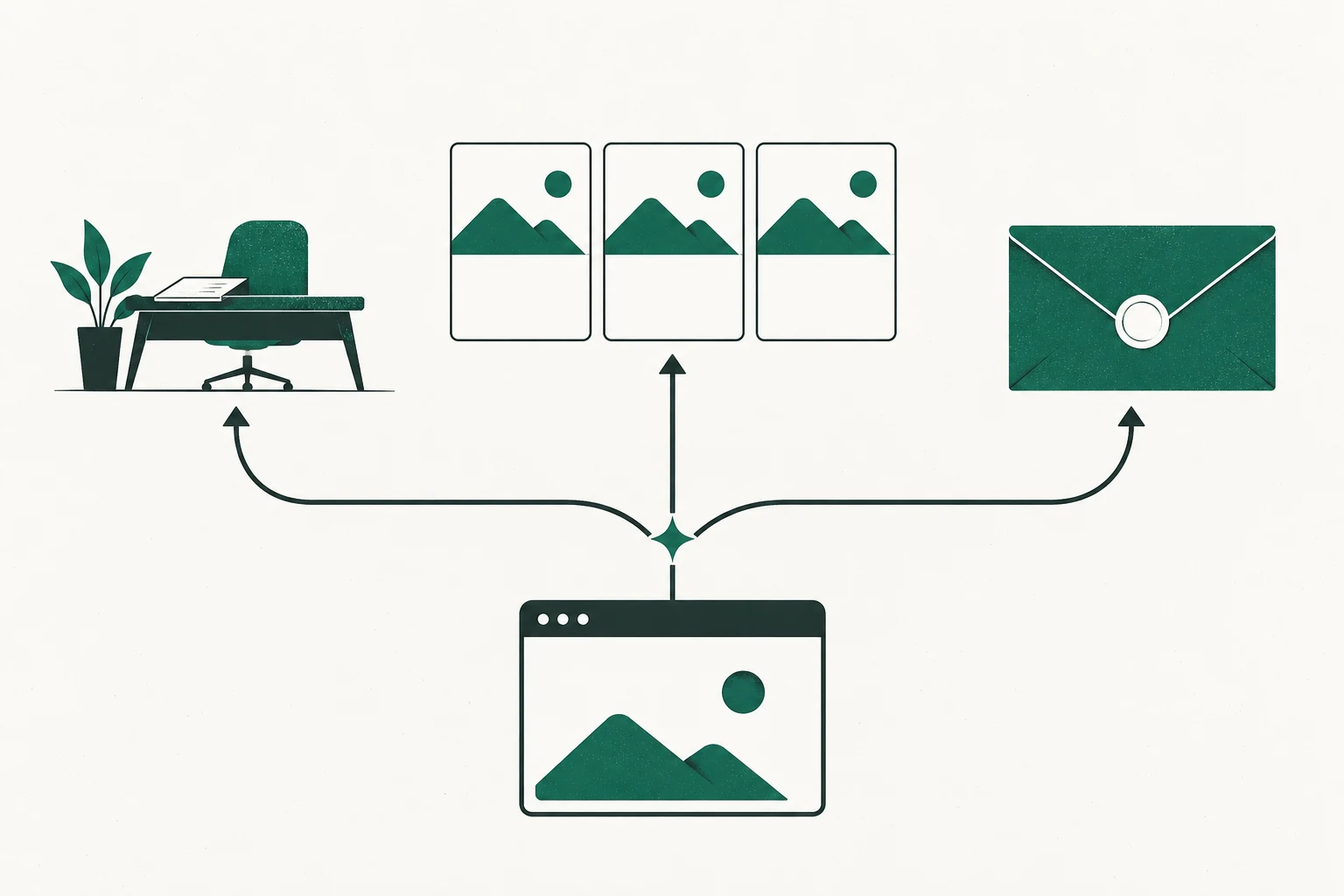
The website broker vs marketplace vs private sale decision is not a contest between one professional route and two inferior routes. It is a fit decision: how much help you need, which buyers you must reach, what the sale can cost, how much confidentiality matters, and which work you can competently manage yourself.
A broker or adviser can lead positioning, outreach, buyer qualification, negotiation, and process management. A marketplace can provide discovery and transaction tools while leaving more work with the seller. A private process can give the seller close control over a selected buyer list, but it also concentrates the sourcing, screening, diligence, negotiation, and closing burden.
This guide provides an editorial decision framework, not legal, tax, investment, valuation, or brokerage advice. Service models and fees change. Read the current engagement agreement, platform terms, and transaction documents before choosing.
Affiliate disclosure: Visionnment may earn a commission from qualifying buyer or seller referrals through marked links on this page. Eligibility, attribution and payment depend on the provider's current terms and qualifying events. That relationship does not determine the route comparison.
The short answer
Consider a broker-led process when the asset is complex, the likely buyer set is specialized, confidentiality matters, deal structuring may be material, or the seller cannot run a sale while operating the business.
Consider a marketplace when the business fits a venue’s accepted asset types, a relevant buyer audience already searches there, the seller can manage inquiries and evidence, and standardized discovery tools are useful.
Consider a private sale when the seller can identify credible strategic or financial buyers, control a disciplined process, protect confidential information, and obtain independent legal, tax, and financial support.
Delay the route choice when financials, ownership, traffic evidence, operations, or transfer paths are not ready. A distribution channel cannot fix an unverifiable asset.
First, separate the three operating models
Labels overlap. Some marketplaces offer optional or required brokerage. Some brokers market through their own curated marketplace. Some “private” deals start with an introduction from an adviser.
Classify the actual service, not the logo:
| Route | Seller usually owns | Intermediary or platform usually owns |
|---|---|---|
| Broker/adviser | Accurate disclosures, business continuity, approvals, specialist decisions | Positioning, process coordination, buyer outreach or network access, negotiation support |
| Self-service marketplace | Listing, responses, qualification decisions, diligence coordination, negotiation | Listing discovery, messaging or deal-room tools, verification options, payment integrations |
| Private sale | Buyer sourcing, materials, screening, cadence, negotiation, diligence, closing coordination | No built-in sale operator unless separately hired |
Confirm which work is included, optional, or excluded. “Full service” can still require the owner to build financial schedules, answer diligence, obtain counsel, and transfer the asset.
Route comparison matrix
| Factor | Broker/adviser | Marketplace | Private sale |
|---|---|---|---|
| Preparation help | Often higher, scope-dependent | Tools or optional services; seller-led in self-service tiers | Seller or separately hired advisers |
| Buyer reach | Broker’s curated network and targeted outreach | Searchable venue and platform audience | Seller’s known and researched targets |
| Buyer qualification | Often managed or assisted | Platform verification varies; seller still evaluates | Entirely seller-controlled |
| Confidentiality | Staged disclosure is common | Depends on listing and privacy options | High control if the process is disciplined |
| Seller control | Shared with engagement process | Usually high within platform rules | Highest direct control |
| Fees | Commonly engagement, success, or blended economics | Listing, subscription, success, payment, or service fees | No venue fee, but advisers and seller time still cost money |
| Negotiation support | Usually a central part of the service | Varies from tools to broker-assisted tiers | Seller and retained counsel/advisers |
| Process workload | Lower for coordination, not zero | Medium to high | Highest |
| Complex deal structures | Often better supported | Possible, but support varies | Possible with capable advisers and counterparties |
| Best fit signal | Complexity and service need justify the mandate | Standardized discovery reaches suitable buyers | A credible, limited buyer universe already exists |
The matrix is not a scorecard yet. Weight each factor according to your transaction.
Compare net proceeds, not headline fees
Build the same cost model for every route:
seller net proceeds = cash and valued non-cash consideration
                    - route and success fees
                    - payment or escrow costs
                    - legal, tax, accounting, and technical costs
                    - remediation and transfer costs
                    - working capital or retained obligations
                    - expected cost of contingent-payment risk
Then add seller time and operating distraction as a separate capacity constraint. Avoid pretending to know a precise dollar value if you do not, but record the hours and tasks each route requires.
Current fee structures illustrate why the agreement matters. Flippa’s official selling page distinguishes self-service and broker-supported selling and says fees vary by package and final transaction value. Empire Flippers’ official seller page publishes a tiered commission schedule and an exclusivity period. Acquire.com's seller pricing combines monthly listing costs with a closing fee. These are vendor claims and current examples, not endorsements or permanent price comparisons.
Ask every provider for a written, deal-specific illustration that covers:
- upfront, monthly, retainer, minimum, and success fees;
- whether the fee applies to cash, stock, assumed liabilities, earnouts, holdbacks, seller notes, or other consideration;
- taxes and payment-processing or escrow costs;
- services or marketing upgrades charged separately;
- fees due after termination or for excluded buyers;
- referral, co-broker, or third-party compensation; and
- expenses payable whether or not the sale closes.
Worked route comparison with a stop condition
Use the same business and the same assumed $150,000 cash price in all three columns. The figures below are hypothetical planning inputs, not quotes or measured venue outcomes.
| Input | Broker-led | Marketplace self-service | Private buyer |
|---|---|---|---|
| Assumed price | $150,000 | $150,000 | $150,000 |
| Assumed route charge | $22,500 | $12,000 | $0 |
| Listing/setup allowance | $0 | $500 | $0 |
| Professional/closing allowance | $4,000 | $6,000 | $9,000 |
| Modeled pre-tax cash | $123,500 | $131,500 | $141,000 |
| Seller process capacity required | Scope-dependent | Substantial | Substantial plus buyer sourcing |
The private route looks strongest only under the assumption that a qualified buyer will pay the same price. If that buyer offers $125,000, the same $9,000 cost allowance leaves $116,000. If no credible private buyer exists, that column is an untested option, not a better offer. Record seller hours separately rather than pretending all routes impose the same work.
An agency owner should add client continuation and replacement-delivery costs to the evidence pack. A content-site owner should add the monetization permission path and concentration downside. The route comparison is only valid when it describes the same transferable operation.
Set a stop condition before marketing: no commitment while the earnings base is unresolved, the essential provider path is unknown, or the likely cash at close falls below the owner's minimum. Get a revised written scope rather than buying additional exposure to solve a diligence problem.
When a marketplace route is useful
For a business meeting its current listing requirements, Empire Flippers can be a candidate when broker coordination and migration justify the cost. A smaller or varied eligible asset may instead suit Flippa self-service if the seller has time to qualify buyers and organize evidence. Flippa also offers broker-supported routes, so compare the proposed service rather than assuming the brands occupy mutually exclusive categories.
If those conditions fit, compare Empire Flippers for a managed sale or compare Flippa selling options. Obtain written terms before selecting either. Choosing to keep preparing or retain the business remains a valid result.
Allocate buyer sourcing under each route
Write down the buyer groups that could operate and finance the asset, then assign responsibility for reaching them. A broker-led route may include targeted outreach; a marketplace offers discovery within its inventory; a private process requires an owner or retained adviser to develop the list.
Compare evidence of relevant reach and the seller time required. A registered-user count is not completion evidence. If a broker-led route wins, the published broker-selection guide owns the next task: testing the actual team's deal history, references, buyer plan and capacity.
Assign buyer qualification without assuming a badge is enough
For each route, name who checks identity, funds, authority and operator fit, what evidence reaches the seller and when sensitive information may be released. A card hold, platform badge or introduction does not establish transaction readiness.
The route decision is whether the seller can competently supply that work or needs contracted help. Detailed broker interviews and qualification standards belong in the broker-selection workflow.
Compare disclosure control by route
Record who can view the URL and sensitive attachments, who grants access and whether information is indexed, emailed or downloaded. A broker or gated venue may supply controls; a private seller must arrange and administer them.
Empire Flippers describes hidden site identity before unlock on its seller page; Flippa describes public and private/off-market routes. Compare the actual option, not an assumed brand-wide privacy setting.
Use the data-room checklist for staged access, redaction and disclosure logs. An NDA does not retract a downloaded file or make unnecessary disclosure appropriate.
Compare control with process discipline
Private sale provides direct control, but direct control is valuable only when the seller can run the process:
- maintain one source of truth for materials;
- answer buyers consistently;
- manage conflicts and competitive information;
- set milestones without misleading urgency;
- compare offers across price, structure, certainty, and obligations;
- keep the business stable; and
- coordinate specialists and closing conditions.
Broker control should also be explicit. Review authority over valuation, list price, buyer outreach, disclosure, offer communication, marketing channels, price changes, and acceptance. The seller should know which acts require written approval.
Marketplace control is constrained by platform rules, listing formats, accepted assets, messaging, payment options, and current terms. Export or preserve transaction records the agreement allows; do not let the platform inbox become the only deal file.
Account for deal size and complexity without using a magic threshold
There is no universal price at which a broker becomes worthwhile. Consider:
- number and quality of likely buyers;
- entities, jurisdictions, currencies, and tax issues;
- code, data, intellectual property, inventory, or regulated activity;
- customer and supplier contracts;
- employees and contractors;
- working capital and liabilities;
- financing, rollover equity, seller notes, holdbacks, or earnouts;
- transition period and continuing seller obligations; and
- cost of a failed or delayed process.
A smaller business with complex rights or regulated data may need more professional help than a larger, clean asset sale. A large strategic deal may use a tightly controlled private process led by advisers rather than a public listing.
Use complexity and execution risk, not prestige, to determine support.
Check whether the route conflicts with retained-business plans
Treat withdrawal, overlapping listings, introduced buyers and retained related businesses as route constraints. Obtain review of the Empire Flippers terms or Flippa terms before assuming a removed listing permits another process. A public “no exclusivity” statement elsewhere does not clear your current obligations.
If a broker route remains feasible, use the published broker guide for the full mandate and post-termination review. If confidentiality controls cannot support your required disclosure boundary, reject or revise the proposed route before marketing.
Use a weighted route scorecard
Set weights before contacting providers.
| Criterion | Weight | Broker | Marketplace | Private |
|---|---|---|---|---|
| Relevant buyer reach | 20 | |||
| Buyer qualification | 15 | |||
| Confidentiality controls | 15 | |||
| Preparation and process support | 15 | |||
| Seller capacity fit | 10 | |||
| Net-proceeds economics | 10 | |||
| Complex-structure support | 10 | |||
| Transfer support | 5 | |||
| Total | 100 |
Score each route from 1 to 5, multiply each score by its weight, and add the results. Divide the sum by 100 for a weighted score out of 5, or by 5 for a score out of 100. For example, a route scoring 4 on every criterion totals 400 weighted points: 4/5 or 80/100. Attach evidence to each score; a high score based on unverified marketing remains provisional.
Run a downside case:
- What happens if the process takes twice as long?
- Which fees or tail obligations still apply if you stop?
- Can the asset be marketed elsewhere after termination?
- Who controls buyer relationships introduced during the mandate?
- How will the business perform while management is distracted?
This scorecard chooses the selling route. If the broker route wins, use the published online-business broker-selection guide for team interviews, references, mandate terms and the broker scorecard. Comparing routes and appointing a particular adviser are separate decisions.
Finish with a route decision and provider-selection handoff
Prepare the website sale-readiness record, a common asset perimeter, a defensible valuation range and the same net-proceeds assumptions for each plausible route. Record your seller capacity, disclosure constraints and any agreement conflict.
Choose the model using the route scorecard, and name what would reverse the choice. If broker-led support wins, use the online-business broker selection guide to appoint the provider. If a marketplace remains plausible, use the published marketplace comparison to shortlist venues. A private route needs a credible buyer-sourcing plan and independent professional support.
The completed output is the route choice and allocation of work. References, detailed team interviews and the broker engagement scorecard are the next task, not a second procedure to complete here.
Red flags across all three routes
- an unsupported valuation used to secure the listing or mandate;
- pressure to publish before evidence is ready;
- vague fee language or a missing contingent-consideration example;
- an undefined exclusivity or post-termination tail;
- buyer-volume claims without relevant completion evidence;
- uncontrolled disclosure of the URL, customer information, code, or credentials;
- no written buyer qualification standard;
- conflicts or referral compensation that are not explained;
- promises of a guaranteed price, buyer, or closing date; or
- pressure to skip independent legal, tax, or financial advice.
Private deals have their own red flag: a familiar buyer can make a seller relax controls. Relationship trust should not replace source evidence, written terms, secure payment, or transfer acceptance.
Route choice does not replace sale readiness
Whichever route you choose, the underlying sequence remains: prepare, value, market, screen, negotiate, support diligence, sign, receive controlled payment, transfer, and obtain acceptance. The complete how-to-sell-a-website guide connects those stages.
Choose the route that improves execution for this asset and this seller—not the route with the loudest audience claim or the lowest visible fee. Then document the decision, the included work, the costs, the disclosure rules, and the conditions that would cause you to change course.