
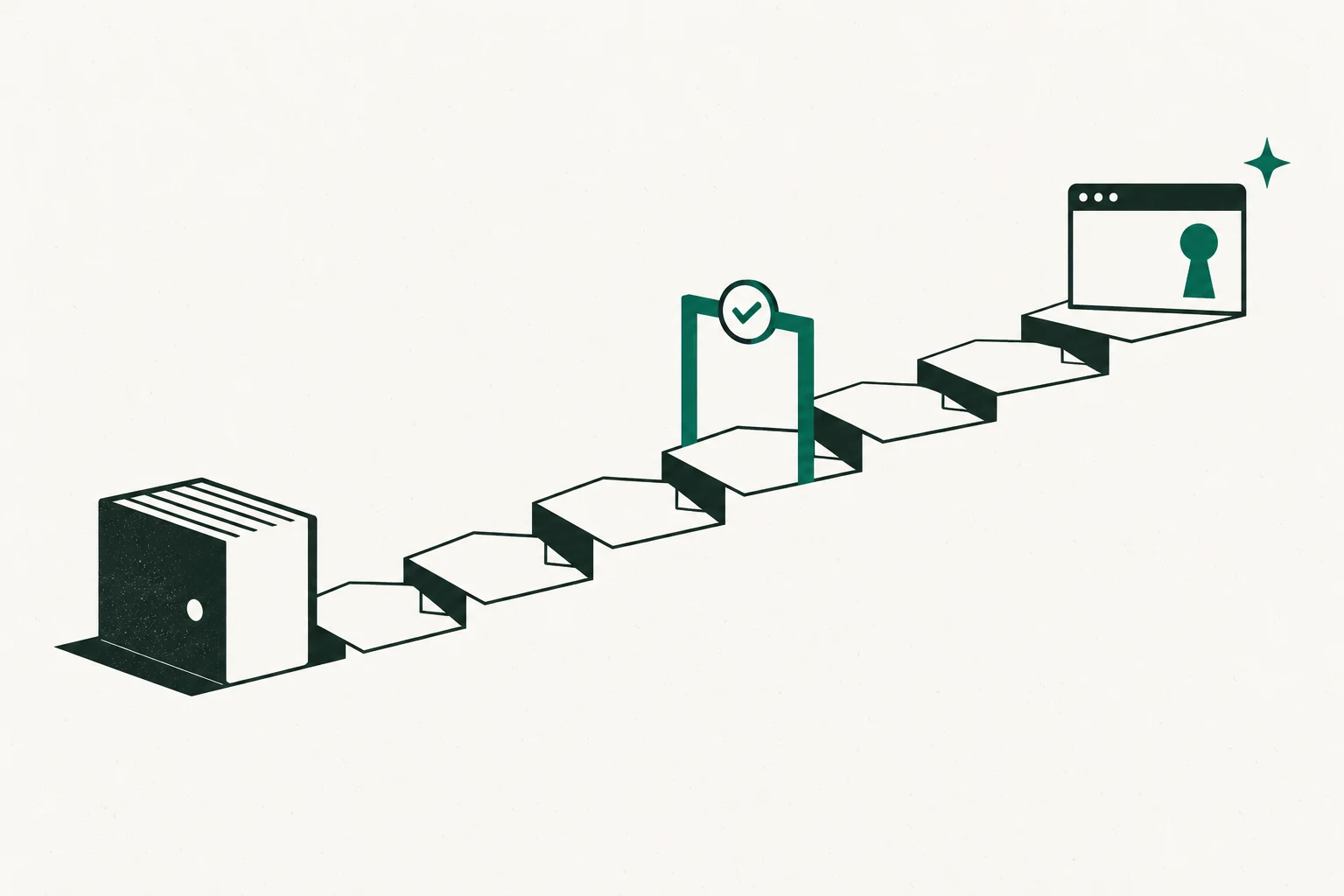
To sell a website well, prepare the evidence before you approach buyers. The process runs from readiness and valuation through route selection, buyer screening, diligence, agreement, escrow, transfer, and post-close support. Skipping a stage rarely removes the work; it usually moves the problem to a more expensive point in the deal.
This guide explains the sequence. It does not provide legal, tax, or investment advice, and no route guarantees a buyer, price, or timeline.
Difficulty: Intermediate
Estimated time: Several weeks to several months, depending on asset quality, route, buyer readiness, and transfer complexity
Prerequisites: Reliable financial records, documented ownership, source analytics, an asset schedule, and enough operating capacity to keep the business stable during the sale
Quick overview
| Step | Action | Output |
|---|---|---|
| 1 | Test sale readiness | Issue and remediation list |
| 2 | Build a defensible valuation range | Assumption-backed range and net-proceeds model |
| 3 | Choose the sale route | Marketplace, broker/adviser, or private process |
| 4 | Assemble sales materials | Teaser, summary, data room, and asset schedule |
| 5 | Screen buyers | Qualified shortlist with confidentiality controls |
| 6 | Negotiate intent and structure | LOI or term sheet with diligence and closing terms |
| 7 | Complete buyer diligence | Resolved findings and final economics |
| 8 | Sign and close through a controlled payment process | Executed agreement and funded closing |
| 9 | Transfer and obtain acceptance | Buyer control, rotated access, and signed completion |
| 10 | Complete post-close duties | Support, holdback, or earnout records |
Step 1: Test whether the website is ready to sell
Start as a skeptical buyer. Can you establish what the business earns, why traffic arrives, who owns each asset, how work gets done, and whether control can transfer?
Review at least:
- monthly revenue, expenses, refunds, and proposed add-backs;
- analytics and search performance from source properties;
- customer, page, keyword, channel, and vendor concentration;
- domain, content, code, design, trademark, data, and contract ownership;
- hosting, DNS, repositories, payment systems, email, advertising, and affiliate accounts;
- recurring tasks, contractor roles, operating procedures, and owner workload;
- incidents, disputes, policy warnings, and material technical debt.
Create an issue register with a remedy, owner, cost, and deadline. Fix material ownership and control gaps before marketing. Cosmetic work should not outrank missing contracts or unexplained earnings.
Success looks like: a buyer can follow the evidence without reconstructing the business from messages and screenshots.
For a deeper remediation framework, use How to Scale a Digital Asset and Maximize Its Value and the website due diligence checklist.
Decide whether to sell, prepare or wait
Write a dated decision before choosing a marketplace. A seller who needs immediate cash cannot treat a contingent offer as available funds. An owner with missing rights documents cannot cure that gap by choosing a less selective venue.
Use three gates. Sell when current earnings reconcile, the included assets have a plausible permission path, and downside proceeds meet your reason for exiting. Prepare when a specific missing record, operating dependency or rights question has a bounded remedy. Wait or keep when the remedy costs more than its likely benefit or the business still serves your goals better under ownership.
Your decision sheet should name the asset, reason for sale, evidence period, unresolved items, minimum cash at close and reassessment trigger. “Review after the missing supplier consent is resolved” is more useful than a date chosen only to create urgency.
If the sale includes only a domain rather than an operating website, use the domain-selling workflow on Flippa. Its listing and transfer evidence differs from a sale that includes earnings, customers, content and operating systems.
Step 2: Build a valuation range and net-proceeds model
Normalize a representative period of profit, document each adjustment, and select a multiple range from relevant completed transactions or qualified advice. Then model proceeds after marketplace or adviser fees, payment/escrow costs, legal and accounting costs, debt or liabilities, and taxes.
Do not treat an automated estimate, listing price, or broker opinion as an offer. Use the website valuation calculator to expose the profit, multiple, and risk assumptions, then read How to Value a Digital Asset for the broader method.
Taxes need transaction-specific advice. The IRS states that a U.S. business sale generally consists of separate assets, and a lump-sum price may need allocation among them. Review the IRS sale-of-business overview with an adviser who understands your structure and jurisdiction.
Success looks like: a base range, a downside case, the minimum acceptable terms, and estimated net proceeds—not one aspirational number.
Step 3: Choose a route that matches the deal
The route changes the buyer pool, workload, confidentiality, screening, cost, and support.
| Route | Often fits | Seller must handle | Main trade-off |
|---|---|---|---|
| Self-service marketplace | Smaller or straightforward assets; seller can run the process | Listing, buyer questions, screening, negotiation, diligence coordination | Broad access with more seller workload |
| Curated marketplace or broker | Established earnings; seller values qualification and transfer support | Deep preparation and adviser coordination | More support, selection criteria, and commission |
| Private sale | Known buyer or narrow strategic pool | Outreach, competition, screening, documents, and project management | Control and privacy with concentration around fewer buyers |
Compare current eligibility, exclusivity, upfront fees, success fees, buyer access, verification scope, payment options, and transfer support in writing. Terms change; verify them immediately before signing.
The marketplace guide and Flippa alternatives comparison can help narrow the route without naming a universal winner.
If a self-service Flippa listing remains on your shortlist, use the Flippa seller-process guide to compare its current packages, model net proceeds, and prepare the evidence a buyer will ask for. Keep the route choice independent of any referral incentive.
Turn the route choice into a comparable packet
Use one asset perimeter and the same price assumptions for every quotation. As an illustrative exercise only, suppose a $100,000 cash offer carries $15,000 of route costs and $4,000 of other seller costs. It leaves $81,000 before tax and retained obligations. A private $95,000 cash offer with $7,000 of professional and closing costs leaves $88,000 on that limited basis. The second offer still needs identity, funding, legal and transfer checks; arithmetic alone does not make it executable.
If considering Empire Flippers, first check its listing requirements. A smaller asset or one with little operating history needs a different route. Flippa's category pricing rules also distinguish starter assets from revenue-generating businesses; an allowed asking price is not a valuation.
Affiliate disclosure: Visionnment may earn a commission if you buy through links on this page. That does not change our evaluation or what you pay. We separate vendor claims from our analysis and date-check material terms before publication. We may also earn a commission on qualifying sales made through our seller referral links.
For an established business that meets the published gates and warrants managed coordination, compare Empire Flippers as a seller. For a suitable smaller or varied asset whose owner can manage evidence and buyer inquiries, compare Flippa selling routes. Keep preparing or retain the business when neither route fits.
Before committing, compare the actual Empire Flippers agreement and Flippa terms with your plans. Ask about exclusivity, withdrawal, introduced buyers, later fees and retained related businesses. Do not launch simultaneous listings without clearance under both applicable agreements.
Step 4: Assemble the sales package and data room
Prepare information in layers so confidentiality increases with buyer seriousness.
Initial summary
Explain the business model, age, owner role, traffic and revenue mix, reason for sale, high-level economics, asking logic, included asset types, and material risks. Do not disclose confidential identifiers before the right controls are in place.
Detailed materials
Qualified buyers may need:
- month-by-month profit-and-loss records and source support;
- analytics, search, commerce, payment, advertising, and subscription evidence;
- operating procedures, workload, team, and vendor details;
- domain, IP, contract, privacy, license, and compliance files;
- technical architecture, dependencies, backups, security, and access inventory;
- asset schedule, exclusions, transition plan, and proposed post-sale support.
Index the data room. Use consistent filenames and a request log. Grant only the access needed for the current stage and remove it when the process ends.
Success looks like: each material claim points to a source and each sensitive file has an intended audience.
Step 5: Screen buyers before exposing sensitive information
Interest is not qualification. Ask about identity, purchasing entity, relevant experience, source and timing of funds, financing conditions, decision-makers, intended diligence team, and target closing date.
Use confidentiality agreements where appropriate, but do not treat an NDA as a substitute for access control. Reveal information in stages. Customer-level data, credentials, source code, and trade secrets usually require more care than a summary financial table.
Marketplace identity badges or funds verification can improve the information set, but they do not decide whether the buyer is right for your deal. Record what was actually verified and when.
Success looks like: a shortlist of buyers with authority, plausible funds, a realistic process, and controlled data access.
Step 6: Negotiate the letter of intent and deal structure
A letter of intent (LOI) or term sheet should make the business points visible before the parties spend heavily on final documents. Its legal effect varies, so use qualified counsel.
Address:
- price and what it includes;
- cash at close, holdbacks, seller notes, or earnouts;
- asset versus entity structure;
- diligence scope and period;
- exclusivity and its end conditions;
- target signing and closing dates;
- working capital, inventory, receivables, and liabilities;
- transition support and seller obligations;
- key conditions, approvals, and termination rights;
- which provisions are intended to bind.
Flippa's current LOI tool, for example, asks for the purchase price, diligence period, closing date, included assets, support, and other terms. That is a useful field list, but a platform form is not transaction-specific legal advice. See Flippa's LOI documentation.
Success looks like: the material economics and process are clear enough that diligence tests a defined deal rather than inventing one.
Step 7: Complete buyer diligence without losing control of operations
Buyers will test financial, traffic, technical, IP, legal, operational, and transfer claims. Respond through a request tracker. Point to source records, distinguish known facts from estimates, and correct material errors quickly.
If trading changes during diligence, use the business-decline and price-retrade record to separate the changed facts, their economic effect and the options to discuss with advisers.
Keep running the business. A sale process that causes missed publishing, support failures, or declining revenue can damage the asset and the negotiation.
When diligence identifies a real issue, resolve it through one or more of:
- additional evidence;
- remediation before closing;
- a price or structure change;
- a representation, covenant, holdback, or indemnity drafted by counsel;
- excluding the asset or ending the transaction.
Success looks like: every material finding has a documented resolution or a deliberate decision not to proceed.
Step 8: Sign the agreement and control payment
The definitive agreement should identify the parties, assets, exclusions, price and payment, representations, covenants, closing conditions, transition, risk allocation, and dispute provisions. Digital assets can cross jurisdictions and depend on third-party platforms; generic templates may omit the issue that matters most.
Use a payment and closing process appropriate to the deal. Confirm:
- who holds funds and under what instructions;
- fees, currencies, and identity requirements;
- what must transfer before release;
- how acceptance and disputes work;
- what happens if a third-party transfer is delayed;
- how holdbacks or deferred payments are administered.
Do not transfer the domain and primary control merely because a buyer sends a screenshot of payment. Verify the actual process and instructions with the provider through a trusted channel.
Success looks like: signed documents, verified funds, unambiguous release conditions, and a coordinated closing checklist.
Step 9: Transfer control in a tested sequence
Use the asset schedule as a transfer runbook. Sequence domain, DNS, hosting, database, code, analytics, Search Console, email, commerce, payment, advertising, affiliate, support, and vendor access to minimize downtime and lockout risk.
For every system:
- Create or confirm the buyer-controlled destination account.
- Back up current data and configuration.
- Transfer or invite the buyer using the provider's supported process.
- Test business-critical functions.
- Rotate credentials, recovery methods, API keys, and multifactor authentication.
- Remove seller and contractor access at the agreed point.
- Record buyer acceptance.
ICANN maintains a Transfer Policy for registrar-to-registrar domain transfers, but registrar operations and temporary locks can affect timing. Check the domain early, not on closing day.
Curated venues may coordinate migration. Empire Flippers' current terms state that its migration typically takes two to eight weeks but can take longer, illustrating why transfer time should be planned rather than promised. See the Empire Flippers Terms of Use.
Success looks like: the buyer controls the documented assets, the website operates, recovery paths are tested, and access removal is recorded.
Step 10: Complete post-close duties
Define support before closing: hours, period, channel, response expectations, included topics, excluded new work, and who pays third-party costs. Keep a log of training, questions, and completed obligations.
Before committing sale money to another asset, reconcile exit proceeds and remaining obligations; contingent consideration and money already collected have different funding uses.
If the deal includes an earnout or seller note, record the reporting method, payment dates, operating covenants, inspection rights, and dispute path in the agreement. Deferred consideration adds counterparty and performance risk; it is not equivalent to cash at close.
Preserve transaction records for legal, tax, and contractual needs. Follow professional advice on retention and reporting.
Success looks like: support ends cleanly, deferred obligations are measurable, and neither party depends on informal access.
Common problems
The website is listed before the records are ready
Symptom: buyer questions trigger new spreadsheets and conflicting answers.
Fix: pause promotion, reconcile source records, and reopen with one documented dataset.
A high offer depends on weak terms
Symptom: the headline price is attractive, but most consideration is contingent or financed by the seller.
Fix: compare risk-adjusted net proceeds, security, covenants, and collection cost—not price alone.
The parties discover a non-transferable account late
Symptom: a revenue, software, or advertising relationship cannot simply change owners.
Fix: contact the provider early, document the supported transition, and create a replacement or closing condition.
The seller hands over credentials instead of transferring control
Symptom: accounts remain in the seller's identity and recovery email.
Fix: use provider-supported ownership changes, buyer-controlled recovery, credential rotation, and written acceptance.
Frequently asked questions
Where can I sell a website?
Common routes include a self-service marketplace, a curated marketplace or broker, and a private sale. Choose by deal size, asset type, confidentiality, support needs, fees, and the work you can manage.
How long does it take to sell a website?
There is no reliable universal timeline. Preparation, buyer demand, price, financing, diligence, legal work, and transfer complexity all affect duration. Treat vendor averages as vendor claims tied to a particular inventory and period.
Do I need a broker?
Not always. A straightforward asset with a known buyer may support a private process. A broker or adviser may add value when screening, confidentiality, negotiation, competition, or complex transfer would otherwise exceed your capacity.
Should I accept an earnout?
Only after evaluating the buyer, trigger, reporting, control, security, enforcement, and downside with qualified advisers. An earnout can bridge a valuation gap, but it transfers collection and operating risk to the seller.
Summary
The durable way to sell a website is to prepare evidence, value a range, choose the right route, qualify buyers, document terms, complete diligence, control payment, and transfer each asset through a tested runbook.
The sale is not complete when a listing says “sold.” It is complete when the buyer has the agreed control, the seller has the agreed consideration, and the remaining obligations are specific enough to finish.