
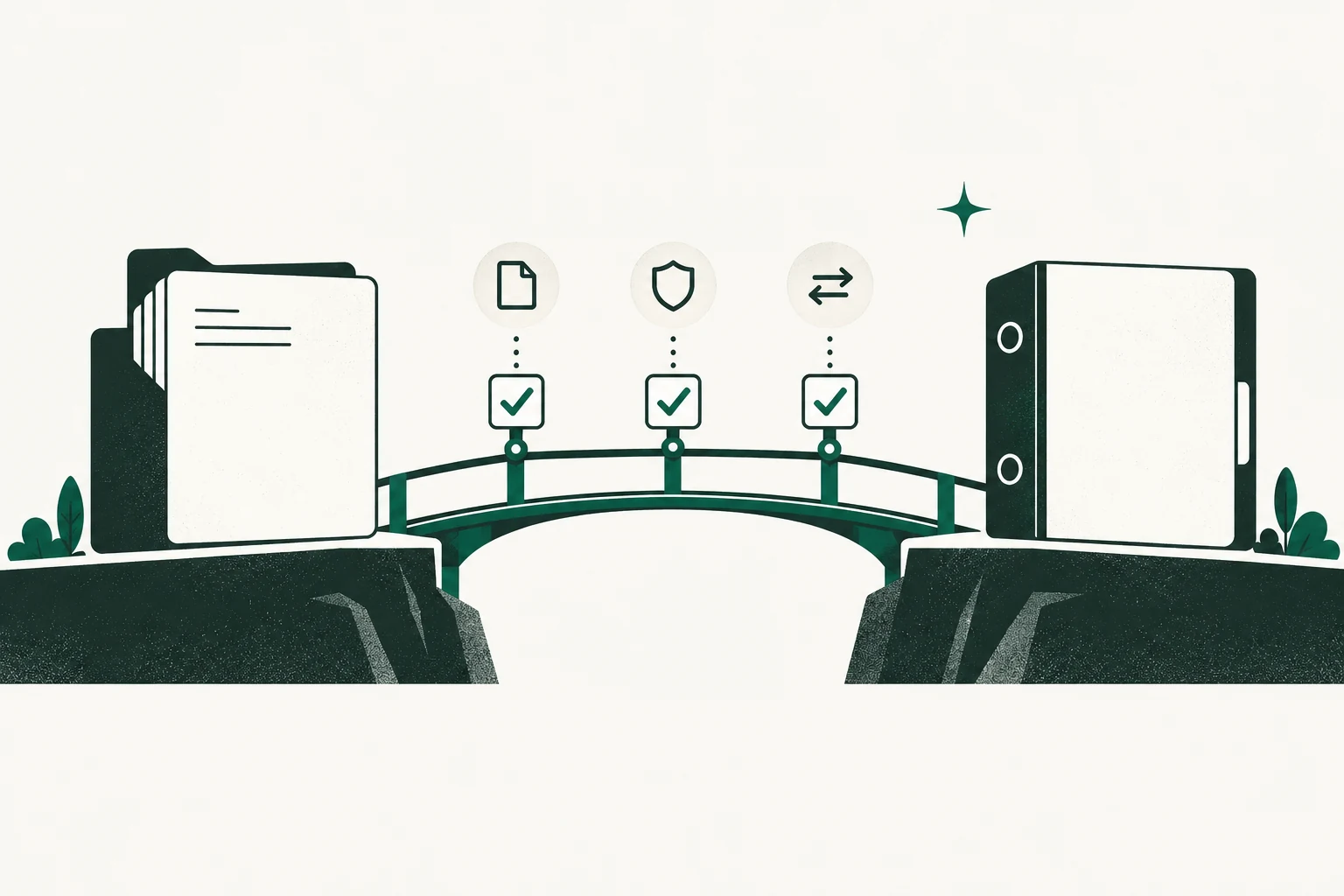
Most website acquisition mistakes are not dramatic acts of deception. They begin with something quieter: a claim, definition, responsibility, or acceptance test that nobody writes down.
A buyer hears “mostly passive” without measuring owner hours. A seller presents profit without defining add-backs. Both sides say an account will transfer without checking the provider's rules. Funds move before the buyer tests the revenue path. Each gap can turn a promising transaction into a reprice, dispute, failed transfer, or operating problem.
The controls below apply to websites, SaaS products, newsletters, content properties, ecommerce businesses, and related digital assets. They are not substitutes for transaction-specific legal, tax, accounting, privacy, security, or investment advice.
The mistakes at a glance
| Side | Common mistake | Better control |
|---|---|---|
| Buyer | Shopping without a written acquisition thesis | Define operator fit, evidence, budget, downside, and stop conditions first |
| Buyer | Treating summaries as proof | Reconcile source systems, statements, and bank or payment records |
| Buyer | Pricing before normalizing the economics | Define revenue, costs, add-backs, owner labor, and reinvestment consistently |
| Buyer | Ignoring concentration and transfer restrictions | Map dependencies and verify provider terms before signing |
| Buyer | Treating marketplace review as complete diligence | Run a transaction-specific review regardless of venue |
| Buyer | Underbudgeting the transition | Price replacement work, working capital, and the first 90 days |
| Buyer | Releasing funds before acceptance | Use a transfer schedule with observable tests |
| Seller | Listing before the evidence is ready | Build a reconciled data room and issue log |
| Seller | Optimizing the pitch while neglecting operations | Reduce undocumented founder dependence |
| Seller | Minimizing known defects | Disclose material issues with evidence and remediation status |
| Seller | Presenting inconsistent financials | Create a traceable monthly bridge with defined adjustments |
| Seller | Assuming access equals ownership | Document rights, licenses, consents, and transfer limits |
| Seller | Choosing a route by its headline promise | Compare process, workload, confidentiality, fees, and net proceeds |
| Seller | Oversharing sensitive data | Stage access and redact information appropriately |
| Seller | Improvising handover | Rehearse transfer and document support obligations |
Buyer mistake 1: shopping without an acquisition thesis
Browsing listings before defining what you can operate makes almost every opportunity look plausible. It also encourages buyers to justify a deal after becoming attached to it.
Write a one-page acquisition thesis before contacting sellers. Include:
- asset model and audience you understand;
- skills you can provide and work you must outsource;
- purchase budget plus transition and working-capital reserves;
- maximum acceptable owner involvement;
- evidence required to evaluate traffic, revenue, costs, rights, and operations;
- concentrations you will accept, reprice, or reject;
- conditions that pause or end the review.
The thesis is not a promise to buy. It is a filter that protects time and makes comparisons more consistent.
Buyer mistake 2: accepting screenshots and averages as evidence
A screenshot can support a conversation, but it is easy to crop, select, misunderstand, or detach from its definition. A 12-month average can also hide a recent decline, seasonality, a one-time campaign, or an expense change.
Ask to inspect appropriate source records and reconcile them. Google Analytics supports a Viewer role, while Search Console distinguishes owners, full users, and restricted users. Those controls can provide suitable visibility without asking a seller to share a password or give editing authority. Review the current Google Analytics role definitions and Search Console permissions before requesting access.
Trace a sample month from customer or transaction detail to the payment processor, financial statement, and bank deposit. Then trace significant costs in the other direction. Note timing differences, refunds, taxes, chargebacks, intercompany movements, and revenue recognition choices instead of forcing every source to match instantly.
Use the full digital asset due diligence framework to organize the evidence and decision.
Buyer mistake 3: applying a multiple before normalizing earnings
An asking price and a multiple do not tell you whether the earnings measure is reliable. First define the economic base:
- which revenue is recurring, repeat, project-based, affiliate, sponsored, or one-time;
- which direct and operating costs are necessary to maintain current performance;
- whether owner labor has been omitted or underpriced;
- which claimed add-backs are genuinely non-recurring and well supported;
- what deferred maintenance, content, support, infrastructure, or compliance work is required;
- how refunds, credits, annual prepayments, taxes, and working capital are treated.
Recalculate under a base case and a downside case. The digital asset valuation guide can help frame methods, but no single multiple determines a fair result for every asset.
Buyer mistake 4: ignoring concentration and transfer restrictions
Concentration is not only “too much Google traffic.” It can occur in a major customer, sponsor, affiliate program, supplier, contractor, platform, keyword group, traffic source, domain, software service, or founder relationship.
For each meaningful dependency, record its share of traffic, revenue, margin, or required work. Then ask a separate question: can the underlying account, contract, license, data, or relationship transfer?
A tool being operational today does not make it a saleable asset. Review current provider terms and obtain consent where required. Sequence domain steps carefully: ICANN notes that certain registrations and registrant changes can create a 60-day inter-registrar transfer restriction. Confirm the actual status before closing through the ICANN registrant transfer guidance.
Buyer mistake 5: treating marketplace review as complete diligence
A marketplace, broker, adviser, or escrow workflow can add structure. Its review still may not answer your exact questions or warrant every seller statement.
Read the venue's current terms, not only its marketing page. For example, Acquire.com's buyer/seller terms direct users to make their own investigations and disclaim warranties about user-submitted content. That does not make the platform unsuitable; it shows why “listed” and “verified” must be defined instead of assumed. See the current Acquire.com Buyer/Seller Terms.
Choose a route using the website marketplaces comparison, then apply the same evidence standard to the underlying business.
Buyer mistake 6: underbudgeting transition and replacement work
The purchase price is only one component of capital required. Build a 90-day operating plan before signing. Include:
- payroll, contractors, tools, hosting, inventory, refunds, and working capital;
- security review, secret rotation, backup validation, and access cleanup;
- content, customer support, sales, product, or engineering work the seller performed;
- deferred maintenance and broken processes identified during diligence;
- professional advice, transfer fees, taxes, and transaction costs;
- a reserve for slower revenue or a delayed transfer.
Test whether the acquisition remains workable if the transition takes longer, revenue is lower, or a key dependency must be replaced. “Passive” is not an operating plan.
Buyer mistake 7: releasing funds before testing acceptance
Possession of a domain or source-code archive does not prove that the whole business works under buyer control. Build a transfer schedule that names the owner, timing, dependency, and acceptance test for every item.
Tests may include administrator access under buyer-controlled email, a verified backup restore, a test deployment, a test customer-support flow, analytics continuity, a successful domain control check, billing access, documentation delivery, and secret rotation. Release funds according to the transaction documents only after the agreed tests pass.
GitHub documents repository and organization transfers separately, and adjacent items such as packages, secrets, deploy keys, billing, and organization roles need their own review. Use the repository transfer documentation as one input, not as the entire software handover plan.
Seller mistake 1: listing before the evidence is ready
There is no universal number of months that makes an asset ready to sell. A buyer needs enough consistent evidence to understand trends, seasonality, major changes, and current performance.
Build a data room before the listing process starts. Reconcile monthly revenue and expenses to source records, prepare traffic and conversion trends, document owner hours, inventory contracts and accounts, assemble content and software rights, and maintain an issue log. Explain anomalies rather than deleting inconvenient months.
Readiness is an evidence condition, not a birthday.
Seller mistake 2: polishing the asking price while neglecting operations
A sophisticated valuation model cannot compensate for a business that only one person knows how to run. Record recurring workflows, decision rules, calendars, access roles, vendor contacts, quality checks, escalation paths, and actual owner time.
Do not manufacture a “hands-off” story by delegating briefly before sale. Show what changed, how long the new process has operated, what remains founder-dependent, and which outcomes are still uncertain. The guide to scaling a digital asset should improve the operation before it becomes sales copy.
Seller mistake 3: hiding or minimizing known problems
Material traffic declines, customer concentration, refunds, disputes, security incidents, content-rights gaps, policy warnings, broken automations, and pending contract changes tend to become more expensive when discovered late.
Maintain a disclosure schedule with the date, scope, evidence, current effect, response, and unresolved risk for each issue. This helps a buyer price the actual asset and gives advisers facts to address in the transaction documents. Disclosure does not guarantee that a buyer will proceed, but concealment weakens trust and can create legal exposure.
Seller mistake 4: using inconsistent financial definitions
Revenue, gross profit, contribution margin, seller discretionary earnings, and adjusted earnings are not interchangeable. Define every metric and add-back. Provide a monthly bridge from the accounting records to the presentation used in the sale process.
Keep personal spending out of business accounts where practical. Where historical personal or mixed transactions exist, label them and provide supporting records. Do not call recurring owner labor, necessary software, ordinary marketing, or deferred maintenance “non-recurring” merely because a future buyer might manage them differently.
Seller mistake 5: assuming account access proves ownership
Files in a drive, a repository login, or an invoice from a contractor does not necessarily prove that all intellectual-property rights transfer. Under U.S. law, copyright ownership is distinct from ownership of a copy, and a copyright transfer generally requires a signed writing. Review 17 U.S.C. §§ 202–205 and obtain transaction-specific legal advice.
Create a rights schedule for code, articles, design, photography, data, trademarks, domains, templates, and licensed components. Link each item to the creator, agreement, license, restrictions, renewal, and transfer mechanism. Also identify customer, employee, contractor, and platform consents that may be required.
Seller mistake 6: choosing a route by its headline promise
The broadest audience, lowest published fee, highest suggested valuation, or fastest claimed process is not automatically the best route. Compare:
- asset-model and deal-size fit;
- screening and evidence requirements;
- public exposure versus confidentiality;
- buyer qualification and communication workflow;
- work the seller retains;
- upfront, success, subscription, legal, and transfer costs;
- expected net proceeds under the written terms;
- exclusivity, tail, cancellation, and post-close provisions.
Provider terms and fees can change. Confirm them on the date you engage instead of copying a comparison table into your deal model.
Seller mistake 7: oversharing sensitive information
A buyer needs evidence, but unrestricted data exposure creates its own risk. Stage disclosure by seriousness and need. Redact personal data, payment credentials, secrets, unrelated customer information, and unnecessary contractual details. Use access logs, suitable agreements, controlled folders, expiry dates, and least-privilege roles.
Demonstrations and anonymized samples may answer early questions. More sensitive records can follow qualification and adviser review. Never solve a diligence request by sending a shared password.
Seller mistake 8: improvising the handover
Create the transfer inventory while preparing the business, not on closing day. Rehearse critical steps where the provider permits it. Identify items that cannot transfer, require a new account, need a third-party consent, or will cause downtime.
Write post-close support as a bounded obligation: named people, communication channel, response window, included hours, excluded work, end date, and escalation path. If an earnout or seller-financed component is used, define the measurement source, accounting policy, operational control, reporting access, dispute process, and events that change the obligation. These structures redistribute risk; they do not automatically align incentives.
The shared mistake: leaving deal language open to interpretation
“Normal support,” “all content,” “verified revenue,” and “successful migration” sound clear until the parties need to act on them. Convert each material phrase into a definition, source, owner, deadline, and test.
Before signing or releasing funds, the transaction team should be able to locate:
- the asset and exclusion schedule;
- normalized financial definitions and supporting records;
- disclosure and known-issue schedules;
- intellectual-property, license, privacy, and consent records;
- an account-by-account transfer matrix;
- security, backup, recovery, and secret-rotation steps;
- acceptance tests and fund-release conditions;
- seller-support and communication boundaries;
- repricing, cure, dispute, and stop conditions;
- advisers responsible for legal, tax, accounting, privacy, and security questions.
The documents and controls must fit the specific transaction and jurisdiction.
Frequently asked questions
What is the biggest mistake when buying a website?
There is no single mistake in every deal. The most consequential pattern is accepting a material claim without agreeing on its definition and checking source evidence. Revenue, owner time, rights, traffic, concentration, and transferability all deserve that treatment.
How much revenue history should a seller provide?
Enough to evaluate current performance, trends, volatility, seasonality, major changes, and the buyer's downside case. That may differ by asset and model. A fixed calendar threshold does not make incomplete or inconsistent evidence reliable.
Does escrow protect a buyer from a bad acquisition?
Escrow can control when funds move under agreed instructions. It does not by itself prove asset quality, ownership, lawful data use, earnings durability, account transferability, or future performance. The transaction needs separate diligence and acceptance controls.
Should a seller disclose every problem?
Sellers should obtain advice about their duties and disclose material facts accurately through the appropriate process. A structured issue schedule is more useful than vague assurances. Do not hide, delete, or mischaracterize evidence.
Can all website accounts transfer to a buyer?
No. Transfer rules vary by provider, account type, contract, jurisdiction, and data involved. Some accounts allow role or ownership changes, some require a new account or consent, and some prohibit transfer. Verify each dependency directly.
Are affiliate relationships part of the asset?
They may be important revenue dependencies, but participation and terms may not transfer. Also review disclosure obligations: the FTC says material connections that could affect how an endorsement is evaluated should be disclosed. See the FTC Endorsement Guides.
Replace assumptions with acceptance tests
Buying and selling digital assets becomes more manageable when both sides make the same shift: from persuasive labels to inspectable evidence and from informal expectations to written acceptance.
Define what is being sold. Reconcile how it performs. Identify what can transfer. Price the work and concentration that remain. Assign every closing step. Then test the asset under the control structure the buyer will actually use.
That process cannot remove every risk. It can expose unclear assumptions while there is still time to verify, restructure, reprice, or walk away.